
Four hundred years on the Chorley road
The White Crow started out as a coaching inn, where passengers on the mail and passenger coaches took rest and refreshment while the horses took theirs. These days they arrive by car, by horse or on foot.
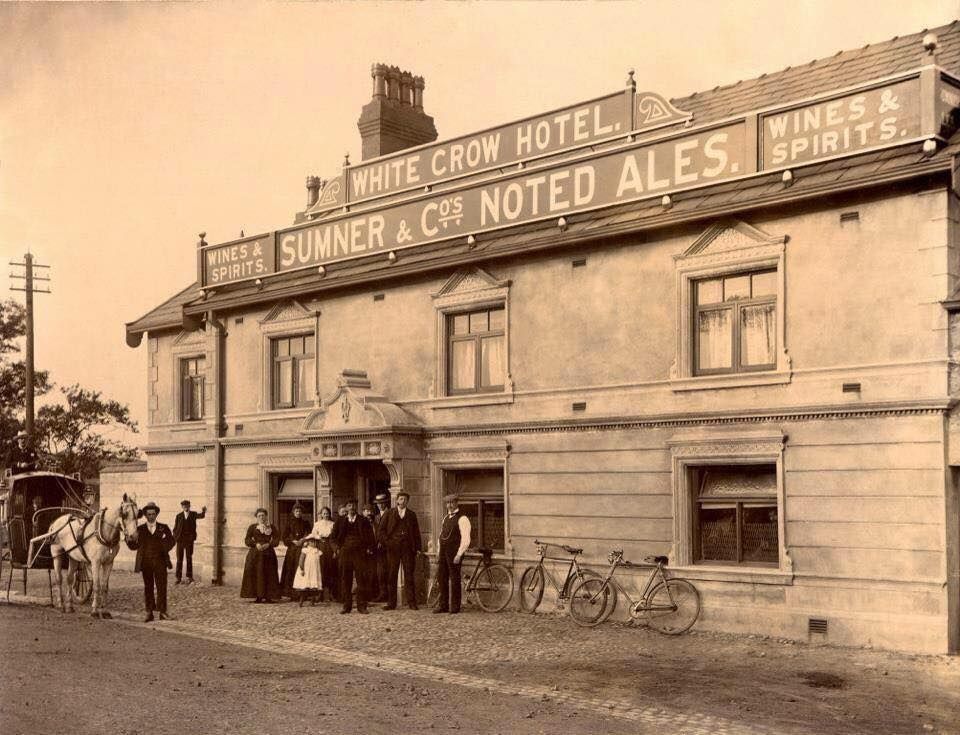
The White Crow Hotel, Sumner & Co's Noted Ales. Date unknown.
How it got its name
It was never meant to be a crow at all.
1500s
The pub dates back to the 16th century, when it was known as the White Cross coaching house.
1688
Thomas Clayton buys the Adlington estate. His family coat of arms, a cross between four red roundels, is thought to have hung on the coaching house, which is how it got the name White Cross.
1690
Clayton buys the neighbouring manor of Worthington from Edward Worthington and his wife, Jane.
1700s
A local signwriter, who had clearly been having a pint before starting work, repaints the sign as the White Crow. The name sticks.
1858
The landlord is recorded as Charles Rigby, who also farms locally.
1944
With an Italian prisoner of war camp nearby and American forces stationed in the area, the Yanks and the Italians end up in a good old-fashioned bar room brawl in the White Crow.
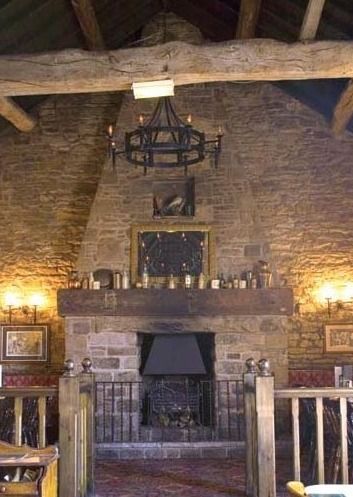
Beelzebub
The white crow has his own place on the southern gable wall, above the huge fireplace. There's no denying he's white, the result of a rare genetic mutation. Nobody knows where the stuffed bird came from or when he arrived, but he goes by the name of Beelzebub and has a real reputation for mischief.
You'll notice he faces into the pub, not out of it. Local superstition says that if he's ever turned round, the pub will be cursed with bad luck. Move him, the tradition says, and be prepared for trouble.
“I sent one of the staff up to clean the bird as it was looking very tatty, and didn't realise afterwards that it had been turned the wrong way. Then we were hit by a series of catastrophes. Within a few weeks the pub flooded, the petrol strike started to affect trade, and we had three power cuts.”
Then a newspaper photographer insisted the bird be turned round for his pictures. With Helen and Stuart out, the staff refused, so he climbed the ladder himself and put Beelzebub on a table. His camera wouldn't switch on. New batteries, a few shakes, nothing. It went away for an expensive repair, and Beelzebub went back in his place, where he has stayed ever since.
More from the old days
In the days of the highwayman, local tradition has it that one used to prey on the coaches and travellers who stopped at the White Crow. His fate is unknown. Rumours that he was the landlord at the time are, apparently, unfounded.
Another landlord was the famous Wigan and Great Britain rugby league player Ernie Ashcroft.
“Worthington is mostly an agricultural township in the parish of Standish, and is situated on the road from Wigan to Chorley, about three miles from Wigan. The population in 1861 was 133; in 1871, 188; and in 1881, 255.”
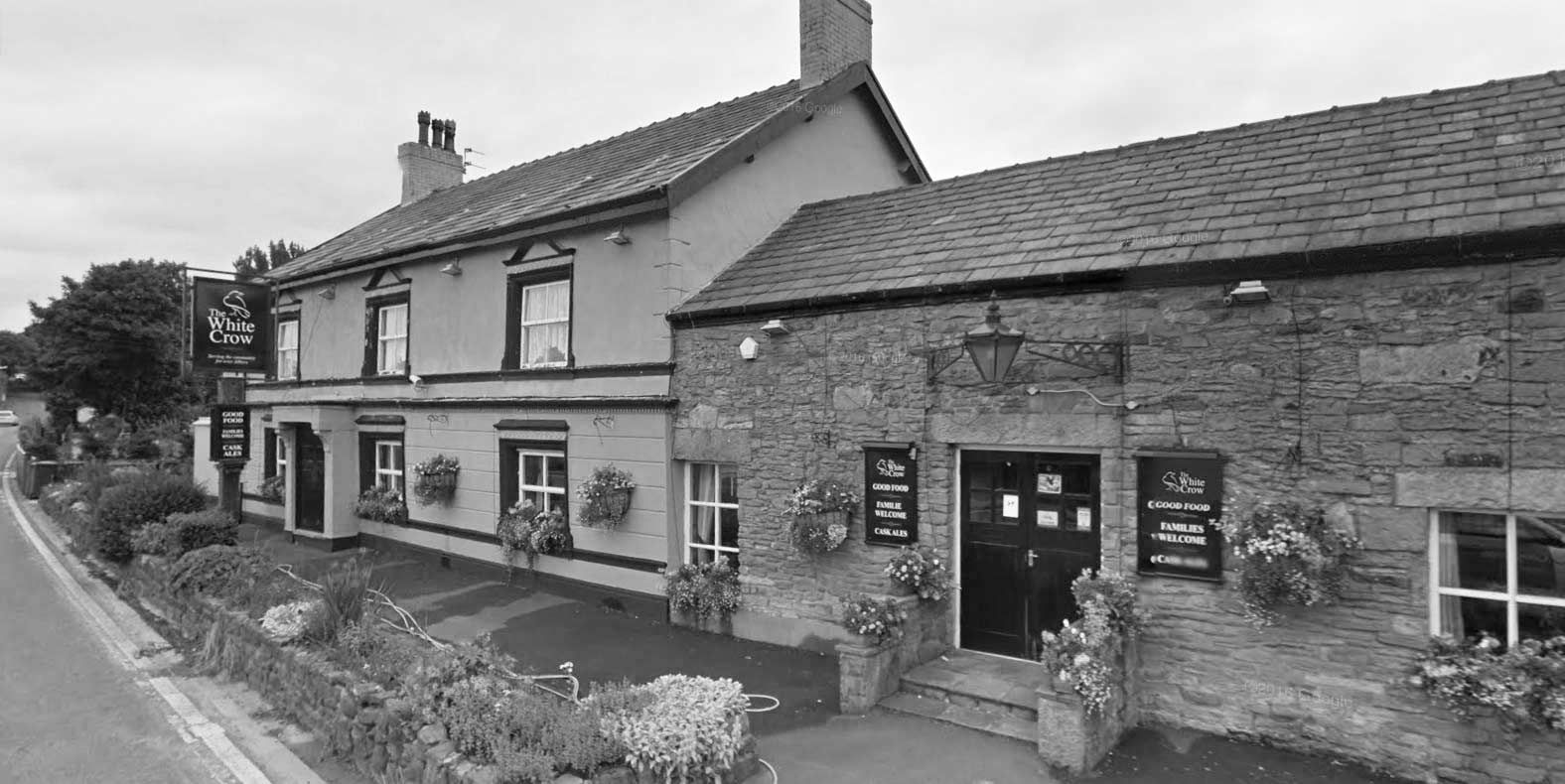
Come and see him for yourself
Beelzebub is above the fireplace, facing the right way. Ring us to book a table nearby.